Press Release
Wuppertal September 11, 2026
Touring Video Expands Flexible Production Workflows With Riedel MediorNet and hi
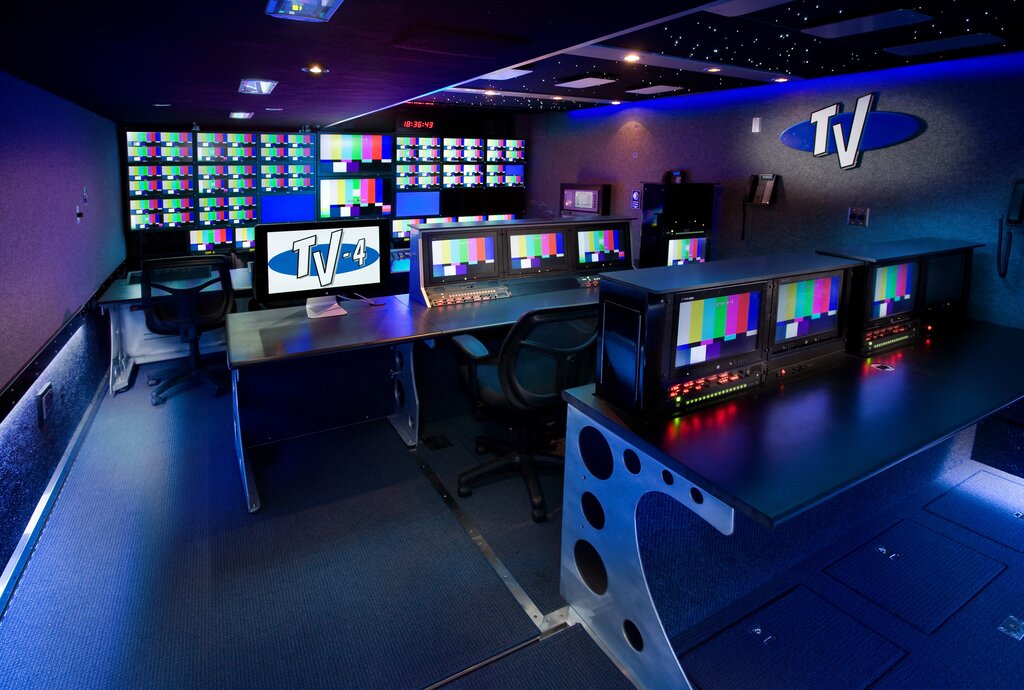
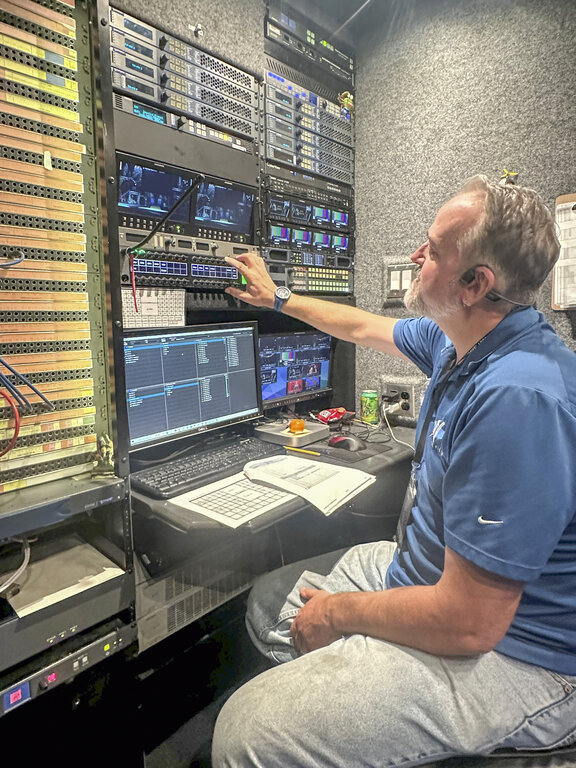
Touring Video first deployed MediorNet and hi together in 2019 as part of its TV-2 production truck build. Since then, the use of MediorNet has grown beyond its original installation. Today, Touring Video operates over 40 MicroN nodes and MetroN core routers, with MediorNet technology deployed across multiple trucks and production environments. MediorNet provides the distributed infrastructure for moving and processing signals, while hi provides the control layer for routing, router panels, and other operational functions.
“While embracing new technology, we wanted to keep it logical, simple and, more than anything else, redundant,” said Doug Armstrong, President of Touring Video. “What started out as a single truck designed with a decentralized router has become part of the way we work across all our productions. Today, MediorNet is our gateway between our fleet and the stage. We now deploy our remote I/O frames exactly where the show needs them — at any corners of a stage or stadium — and all this executes quickly without having to redesign the entire workflow every time.”
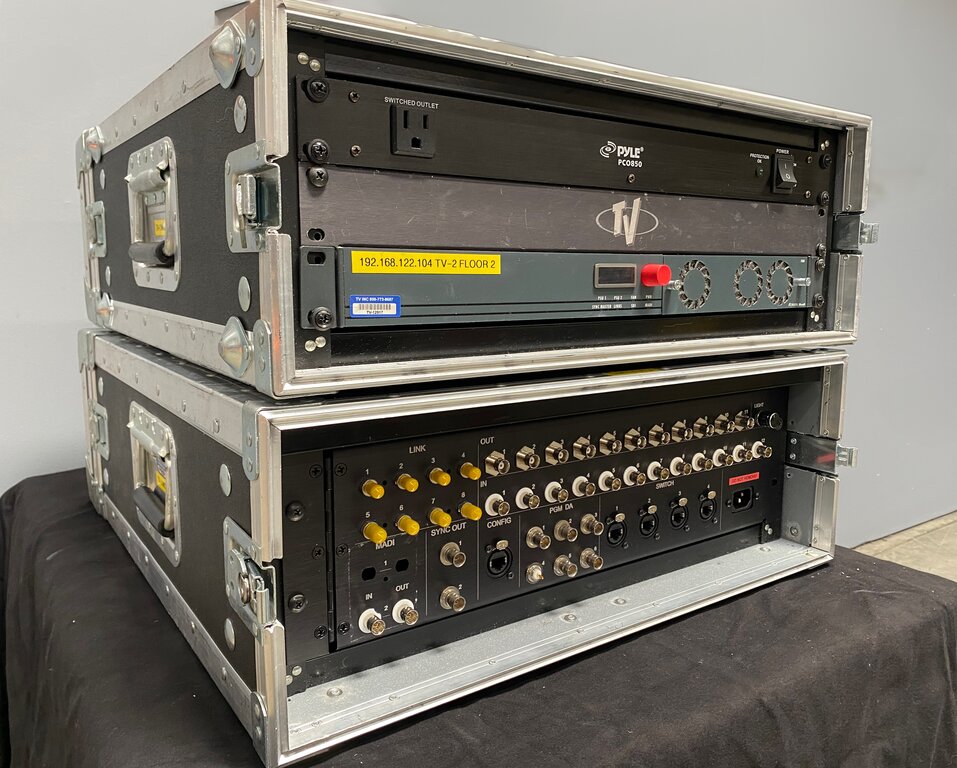
For deployments, Touring Video has developed custom portable I/O frames built around MediorNet MicroN. These kits allow the crew to position remote I/O nodes at locations such as stage left, stage right, backstage, or at an on-stage video village connecting them all back to the truck over multiplexed fiber. In addition to 24 paths of 3G-SDI, each MicroN remote I/O frame supports black reference, MADI, and an Ethernet tunnel. These Touring Video custom frames also include DAs and network switches providing complete connectivity effortlessly. Inside the trucks, the distributed architecture also reduces point-to-point cabling and frees valuable rack space and consolidates processing functions within the MediorNet infrastructure. Touring Video also uses MediorNet for embedding and de-embedding, frame synchronization, test patterns, signal identification, and multiviewers, reducing the need for separate external processing equipment.
“Instead of having hundreds of wires all coming back to a singular truck I/O, we’ve got 24 3G-SDI connections here, 48 3G-SDI connections there, wherever we need them, and it’s all connected with multiplexed lightweight ST fiber cables,” said Bill Keskinen, Senior Vice President at Touring Video. “We reduced the need for separate fiber converters, frame synchronizers, test generators, and a lot of other gear. That saves us a lot of space, reduces cabling, and therefore saves a lot of weight.”
hi’s flexible control system and intuitive RCP panels complement the distributed MediorNet infrastructure, providing a simple, centralized environment for managing the routing workflow. With hi and MediorNet now under the same Riedel umbrella, Touring Video also sees an operational benefit in having infrastructure and control supported as part of a more unified ecosystem.
“We brought hi into the workflow alongside MediorNet to handle control, including our router panels and other operational functions,” continued Keskinen. “Having hi and MediorNet within the same company is a real advantage because there’s one team looking at the complete system. That’s important to us — Riedel’s customer service and the stability of its products were a big part of why we were comfortable taking a revolutionary decentralized approach in the first place.”
Touring Video’s relationship with Riedel also extends to production communications. The company has long relied on Riedel Artist for its intercom infrastructure and today uses Bolero as its primary wireless intercom system. Together with MediorNet and hi, these technologies give Touring Video a broader Riedel-based foundation for both signal workflows and crew communications across its productions.
“Touring Video demonstrates exactly what the combination of MediorNet and hi can enable — flexible, distributed infrastructure together with the control needed to manage it efficiently,” said Ernesto de la Torre, VP Key Accounts / Motorsports AMS, Riedel Communications. “What began as a single-truck installation has evolved into an adaptable production architecture that Touring Video can deploy across different shows, trucks, and production spaces — and continue to expand as its requirements evolve — without sacrificing simplicity, efficiency, or reliability.”