Press Release
Wuppertal September 11, 2026
Riedel Technology Powers Record-Breaking Esports World Cup Production in Paris
The production brought together more than 2,000 players representing 200 clubs, who competed for a total prize pool of $75 million, making it one of the largest esports events ever staged in Europe. Each of the eight competition stages operated as a fully equipped broadcast environment, with dedicated operators and production managers preparing content for the world feed. Connecting the broadcast systems at each stage with four production areas, central broadcast facilities, and supporting technical spaces required a tightly integrated communications and signal distribution backbone.
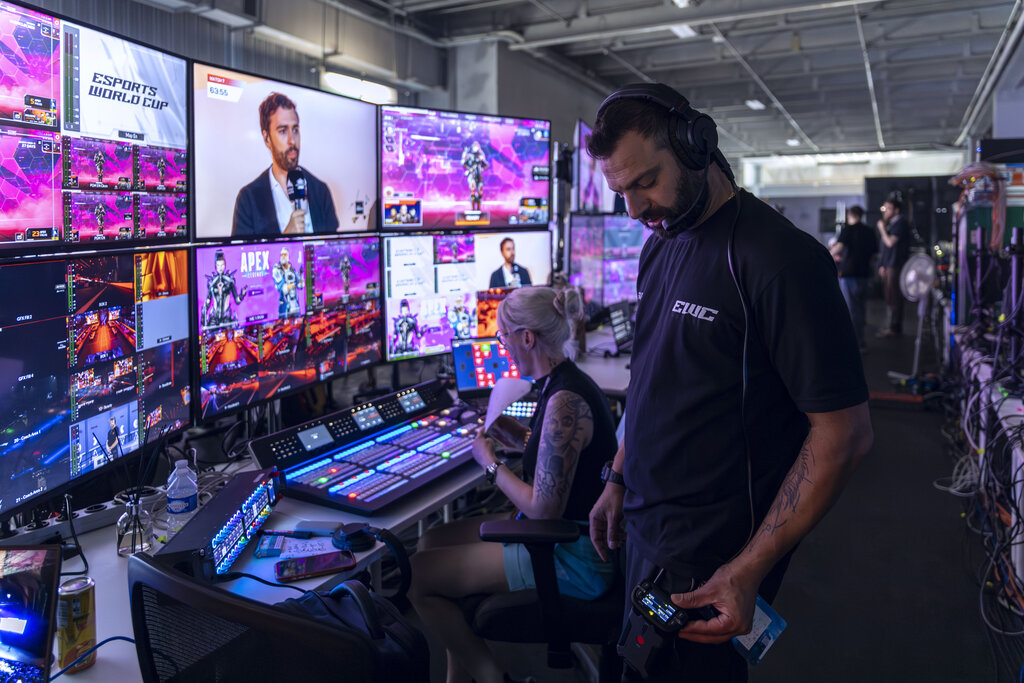
ESL FACEIT Group and Charco jointly designed and deployed the event's on-site intercom infrastructure using an extensive Riedel ecosystem comprising five Artist-1024 frames, 341 Bolero beltpacks, 79 Bolero antennas, and 330 SmartPanels. Producers, directors, referees, and international production crews relied on the system to coordinate activities seamlessly across all eight stages throughout the tournament.
Operating up to 341 Bolero beltpacks simultaneously in a single venue presented one of the project's most demanding technical challenges. Achieving this unprecedented wireless device density required meticulous RF planning, extensive use of Bolero's Frequency Scanner functionality, and additional frequency spectrum made available by the French National Frequency Agency. Seven dedicated scanner antennas continuously monitored the RF environment during production, helping the technical team identify and address potential interference before it could affect operations.
“Delivering dependable communications in such a dense RF environment was a remarkable technical achievement,” said Mateusz Kałuża, Lead Audio & Intercom Engineer, ESL FACEIT Group. “Bringing experienced intercom engineers from Charco on board was critical to our success. That expertise, paired with close collaboration across all teams, enabled us to support users throughout Paris Expo’s 45,000 square meters of event space without compromising operational reliability.”
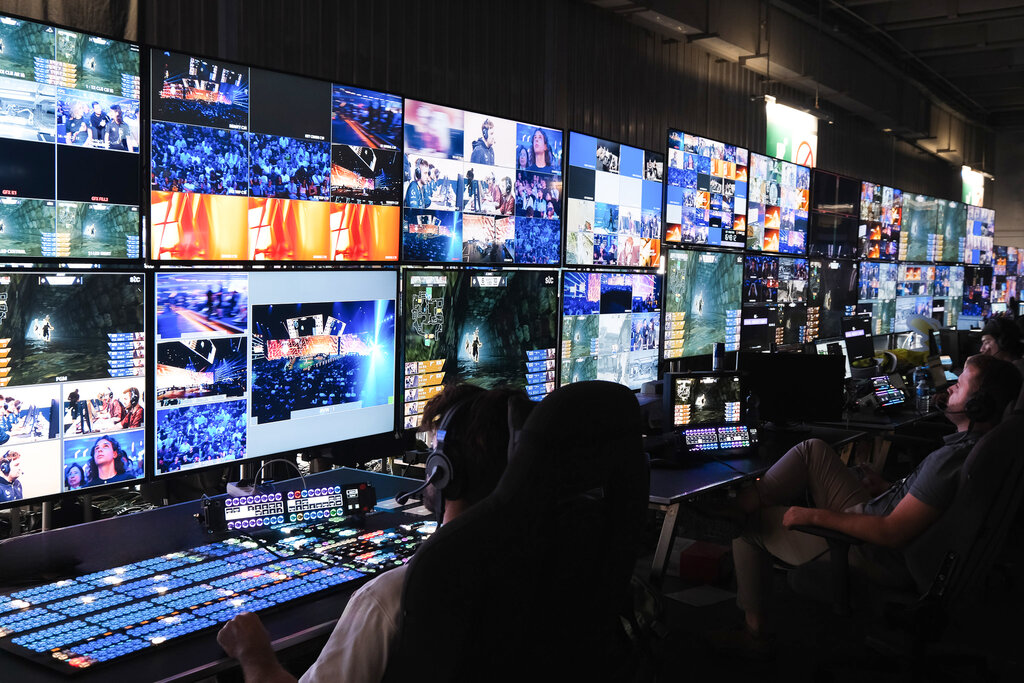
International broadcast and production service provider Gravity Media was responsible for the tournament’s central video infrastructure. More than 140 Riedel MediorNet MicroN UHD units were deployed across the production, forming the largest temporary MicroN UHD network ever deployed. Interconnected through a centralized MediorNet core, the distributed units spanned the competition stages, four production areas, and additional technical support facilities. The infrastructure transported signals from more than 300 camera sources alongside numerous gameplay and graphic feeds.
“Reliability and scalability are indispensable for a production of this size. Riedel's distributed MediorNet infrastructure allowed us to route signals efficiently between a wide range of production areas and adapt the system to the event's specific operational requirements,” said Peter Newton, Director Media Services & Facilities, Gravity Media.
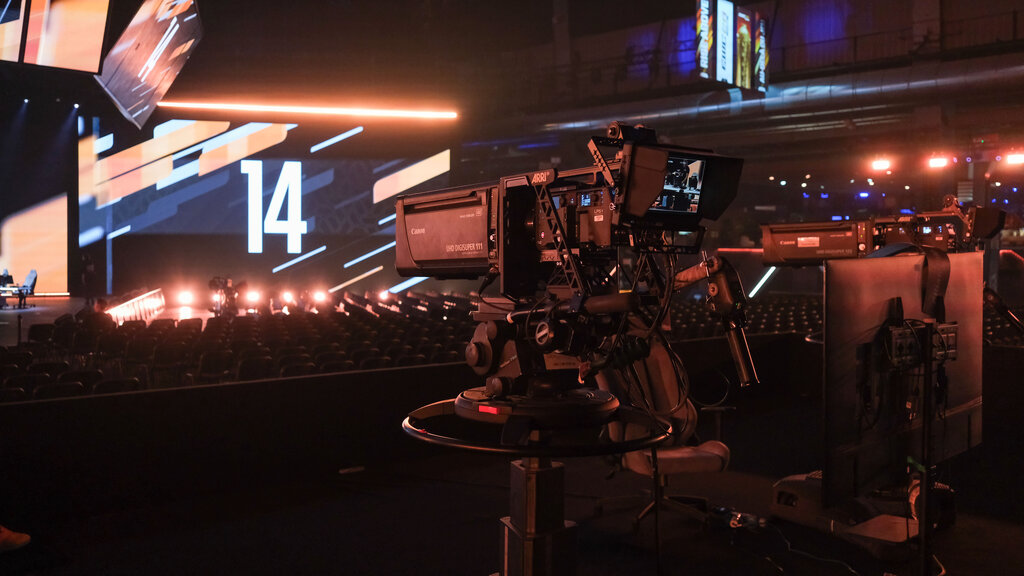
The main stage featured six ARRI camera systems, including ALEXA 35 Live cameras, together with a range of specialty camera platforms such as Trinity, Steadicam, Spidercam, Technocranes, and cable- and rail-mounted systems. Integrated into the MediorNet infrastructure, the cameras delivered cinematic live images, while the distributed network ensured reliable signal transport across the production. Camera operators were also equipped with Bolero beltpacks, connecting image acquisition, signal transport, and crew communications within a unified Riedel technology environment.
“The sheer scale and complexity of the Esports World Cup placed exceptional demands on every part of the production,” said Fabian Leimbach, VP Production Technology, ESL FACEIT Group. “Gravity Media, Charco, ARRI, and Riedel Communications brought outstanding expertise, precision, and commitment to the project, creating a robust technical foundation for our international teams throughout the tournament. Their close collaboration and ability to perform under intense time pressure were instrumental to the success of this landmark production.”